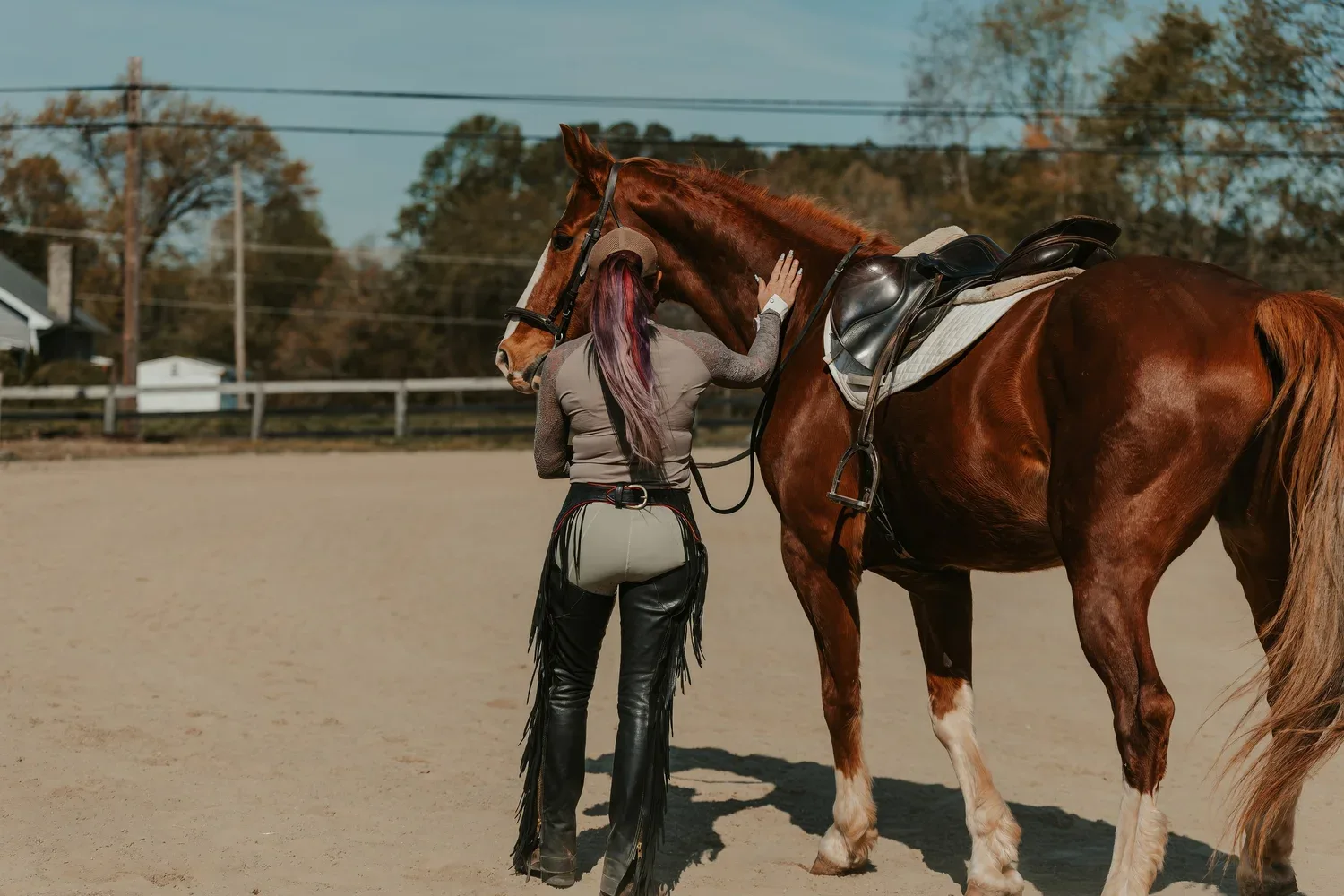
English full chaps cover the entire leg from hip to ankle, sitting tightly over your riding boot and breeches. The short answer to why riders wear them: they take the wear instead of expensive tall boots from stirrup leather rub, add a layer of warmth when schooling in cold weather, and give you more grip and leg feel against the horse's side.
Blue Ridge Custom Chaps builds English/Hunter Jumper chaps as a tighter, slimmer version of their western lines. The fit runs close all the way down the leg, and a snap at the ankle secures the chap cleanly around your boot without bulk. If you are schooling through November and into the new year, a well-fitted pair makes a real difference.
Full chaps versus half chaps: what actually changes
Half chaps cover the lower leg only, from just below the knee to the ankle. They are lighter, easier to pack, and work well in milder conditions or for riders who already own quality paddock boots. Full chaps cover your entire leg, all the way around.
From a fit standpoint, the full length leather. The inner thigh and knee are the first places a breeches fabric wears thin from stirrup leather contact. A full chap eliminates that friction entirely. In winter, the full coverage also traps body heat in a way half chaps simply cannot match, because a half chap leaves the thigh exposed to wind and cold air.
Half chaps: lower leg only, lighter, easier to put on over paddock boots
Full chaps: hip to ankle, full leg warmth, full boot and breeches protection
Full chaps secure with a snap at the ankle to sit clean around a tall boot
How English chaps differ from western chaps
Western chaps, particularly shotguns, are built for a looser silhouette, more hardware, and often decorative fringe. English and Hunter Jumper chaps are a tighter, slimmer version: the leg is fitted from top to bottom with no flare, the profile stays close to the boot, and the overall look is clean enough for a hunter or jumper warm-up ring.
The snap closure at the ankle is a key detail. It keeps the chap from riding up or gapping when you two-point or post. Blue Ridge's English chaps are designed with that specific closure so the chap wraps the boot correctly and stays put through a full schooling session. If you want fringe and a bit more western character, we can built you a hybrid set.
Slim, close-fitting leg with no flare or excess material
Clean profile suits hunter, jumper, and equitation rings
Snap ankle closure keeps the chap seated on the boot
Less hardware and ornamentation than western styles
What a proper fit looks like
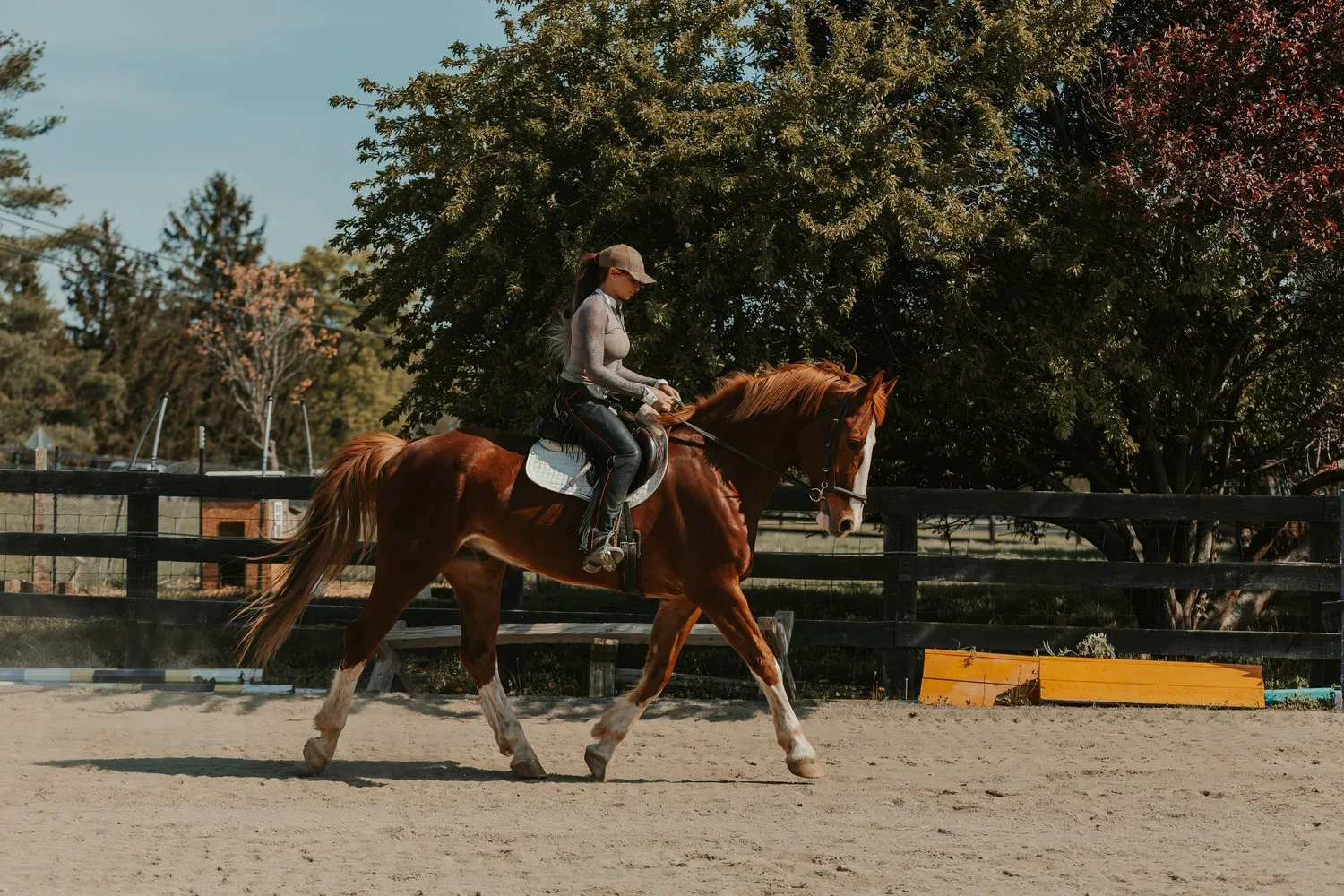
A well-fitted English full chap should feel snug but not restrictive. It should not bunch behind the knee when you flex, gap at the calf, or slide down when you post. The waist sits high enough that the chap stays put when you rise, and the ankle snap closes flat without pulling the leather.
The most common fit mistake is ordering by body size alone. English chaps need to be measured at the waist, thigh, knee, calf, and length, because leg proportions vary considerably between riders of the same general size. Blue Ridge's fully guided video-call measurement process is designed exactly for this: out-of-state customers go through each measurement on a call with Jack, which removes the guesswork that comes with measuring yourself and hoping for the best.
Once your chaps arrive, you have 10 days to send photos so Blue Ridge can verify the fit. If anything is off, they will alter it. That window matters with English chaps in particular, because a small amount of extra fabric at the back of the knee changes how the chap sits when you are in a two-point position.
Measurements every 3 inches, all the way down the leg
Chap should not bunch behind the knee when you flex
Ankle snap should close flat without pulling
No gapping at the calf when standing in stirrups
10-day fit review window after delivery for any alterations
Ordering a custom pair: what to expect
Blue Ridge Custom Chaps builds English full chaps to order. The process starts at $750 for the base build, and you can design every detail in the online Chap Builder before committing, with a live price that updates as you go. No payment is required until you request a quote.
If you are unsure where to start, you can schedule a free video call with Jack to talk through the design, see reference photos, and get your measurements taken together on the call. A free leather sample box is mailed to you so you can see and feel the colors before you decide.
For riders who want to try the design process first, the Custom Chaps Design Studio lets you build out a full English chap design, pick your colors and hardware, and see a running price estimate at no cost and with no obligation.
English full chaps base build starts at $750
Free design call with Jack to work through options before ordering
Free leather sample box mailed to your door
Standard lead time of eight weeks
$200 deposit to begin; balance due before your chaps ship
English Full Chaps for Winter Schooling: Why Riders Wear Them and How They Should Fit
A practical fit checklist for English full chaps
Before you finalize measurements or accept a new pair, run through these points while wearing your usual breeches and tall boots. If you are ordering custom and measuring at home, have someone help you so the tape stays level.
Waist measurement taken over breeches, at the natural waist where you want the chap to sit
Thigh measurement at the fullest point of the upper leg
Knee measurement with the leg slightly bent
Calf measurement at the widest point
Length measured from the waist down the outside of the leg to the ankle bone
Check that the snap closure lies flat with no pulling when the boot is on
Walk and post in them before accepting fit: no bunching behind the knee, no gapping at the calf
Why wear chaps when riding a horse?
Chaps protect your legs and your clothing from friction, weather, and brush. In an English context, the main reasons are protecting tall boots from stirrup leather rub, adding warmth during cold schooling sessions, and improving grip and feel against the horse's side. Full leather chaps also protect the inner thigh and knee, which take the most wear from daily riding.
Some riders wear them purely for the boot protection: a good pair of tall boots is a significant investment, and the stirrup leather will wear a groove into the shaft over time without something between them. Others put them on the moment temperatures drop and ride in them all winter.
Why wear half chaps when riding a horse?
Half chaps serve a lot of the same lower-leg purposes as full chaps: they protect the boot shaft from stirrup leather contact, add grip, and give a cleaner look than breeches alone. They are a popular choice because they are easier to put on, work with paddock boots as well as tall boots, and are lighter for warmer months or indoor arenas.
The trade-off is coverage. Half chaps leave the thigh and upper knee exposed, so they do not help much with warmth or upper-leg protection. For serious winter schooling, particularly in unheated arenas or outdoor rings, full chaps tend to be the more practical choice. Half chaps remain a solid option when warmth is not the priority and you want something quick to pull on.